

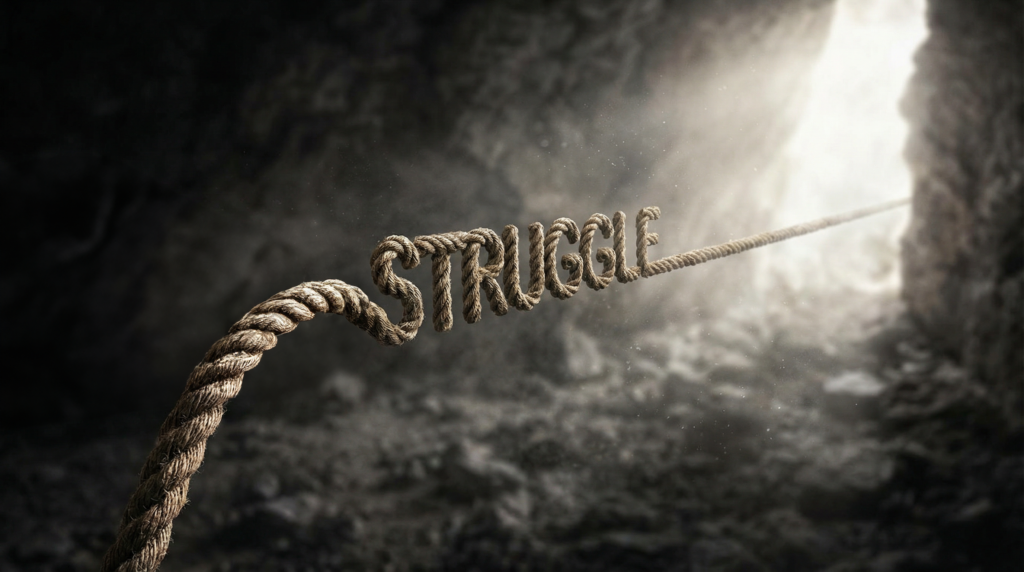
(When pain stops being your identity)
For a long time, my struggles felt like home. They shaped how I spoke. How I explained myself. How I understood who I was. Pain gave my story structure. It gave meaning to my resilience. It gave context to my choices. And then, one day, something shifted. Not dramatically. Not all at once. The pain softened. The intensity faded. The struggle that once defined my days loosened its grip. And instead of relief, I felt something unexpected.
Confusion.
When has pain been your companion for too long
When you’ve lived through long seasons of emotional difficulty, pain becomes familiar. You learn how to move around it. You learn how to explain yourself through it. You learn how to survive with it quietly sitting beside you. Over time, pain becomes more than an experience. It becomes a reference point.
You are the strong one. The one who endured. The one who made it through, and while that strength is real, something else happens alongside it. You start to know yourself primarily through what hurts you.
When pain begins to ease, it leaves behind a strange silence. When there is no crisis to manage, no emotional fire to put out, no immediate survival mode, there is a feeling of quiet. And in that quiet, a question rises: If I am no longer fighting, who am I? This question can feel unsettling. It was the pain that gave you identity. It gave you language. It gave you proof of depth. Without it, you may feel undefined.
Why do we hold on to pain longer than we need to
Letting go of pain is not always easy, even when it no longer serves us.
Pain has given you:
- A sense of purpose
- A reason for your guardedness
- An explanation for your fears
- A narrative that others understand
Healing threatens that familiarity. There can be a quiet fear underneath: If I let this go, will I still matter? This fear does not mean you want to suffer. It means your pain has been seen, validated and recognised, and you are unsure what replaces that visibility.
Sometimes, without realising it, we begin to introduce ourselves through what we survived.
We say:
- “I’m someone who’s been through a lot.”
- “I’ve had a difficult past.”
- “Life hasn’t been easy for me.”
These statements are true, but when they become the only truth we hold onto, they limit who we allow ourselves to become. Pain explains you, but it does not define you.
The discomfort of softness
Healing often brings softness, and softness can feel unfamiliar, even unsafe if you’ve spent years being strong. Without struggle, you worry about feeling exposed or feeling that you don’t deserve ease or that your joy is temporary. You are almost always bracing yourself for the next wave. This does not mean healing is incomplete. It means your nervous system is learning a new way of being.
Softness takes time to trust.
You are more than what hurt you. This is something many people need to hear repeatedly. Your insight did not come only from pain. Your empathy did not exist because you suffered. Your depth is not dependent on hardship. Pain revealed parts of you. It did not create all of you.
There are qualities within you that existed long before the struggle:
- Curiosity
- Creativity
- Kindness
- Playfulness
- Intuition
These parts deserve space too.
Rebuilding identity after pain
When pain loosens its grip, identity does not disappear. It expands. This expansion can feel disorienting at first.
You may need to ask:
- What brings me joy when I am not coping?
- What feels meaningful when I am not proving resilience?
- What do I like, not what do I endure?
These questions are not indulgent. They are restorative. You are allowed to discover yourself again without urgency. Your past does not need to be erased for healing to be real. Pain can remain a chapter. It can be a teacher or a memory that shaped you because that was what was needed at the time. However, it does not need to be the headline of your life forever.
You can honour what you survived without staying there. You can respect your scars without introducing yourself by them.
A personal truth
There was a time when I didn’t know how to speak about myself without referencing what I had endured. My strength felt tied to struggle. My worth felt proven by survival. When the pain softened, I felt almost empty, but slowly, something else emerged: A quieter self, a more playful self, a self that wasn’t always bracing for impact.
It took time to trust that version of me butshe was always there, waiting.
If part of you fears that healing will erase your depth, know this: You do not lose yourself when you let go of pain. You meet yourself.
Healing does not make you shallow. It makes you spacious. You are allowed to be more than your wounds.
Who are you becoming
You are becoming someone who:
- Feels without collapsing
- Rests without guilt
- Enjoys without waiting for loss
- Exists without constant self-protection
This version of you is not weaker. They are freer.
If pain has been your identity for a long time, releasing it will feel unfamiliar. That does not mean it is wrong.
It means something new is forming. You are not losing your story. You are widening it and who you are without your struggles is not empty.
They are whole.
They are alive.
They are finally allowed to exist without explanation.
And that is healing.


Social Profiles